|
Who
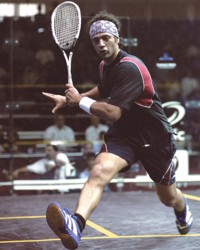
would have imagined that squash, with the social prestige it created for
itself, and its success with changing attitudes to health and fitness, was
born, according to some versions of its history, in a debtors’ prison?
True or not, squash is certainly the child of a game –
rackets - which originated from Fleet, an infamous London jail in which
inmates were often subjected to very cruel treatment.
But since then the sport-in-a-room with the dubious
antecedents has achieved much, especially in Britain, whose players have
delivered success no other racket sport can match.
That is just one of the facts which dispel the many myths
surrounding the family of four – squash, tennis, badminton and table tennis.
Some of these derive from tennis having been the wealthiest, sexiest, best
dressed and most publicized of them all, over-shadowing the successes of its
sister sports.
For this reason the illusions of the money-and-media age need
revealing as much now as when a comparison of this quartet of relatives was
last attempted almost ten years ago.
Despite its wonderful qualities, tennis is not the most
widely played racket sport internationally (table tennis is), neither does
it have the longest and ancestry (badminton has), nor does it possess
British world beaters (but squash does).
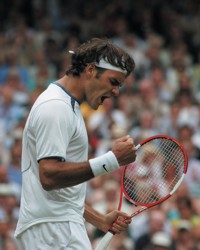
True, Wimbledon is by far the most famous racket sport event
of all, but when a world table tennis championship was held in Manchester,
fully 110 countries took part, which made it the most cosmopolitan ever held
in this country.
Although lawn tennis was dragged into existence from its
Middle Ages parent, real tennis, by a hotch-potch of nineteenth century
midwife versions, which included five-foot nets, hour-glassed shaped courts,
and two-inch balls, it is badminton which is the most venerable, versions of
it having which been depicted on pottery 3,000 years old.
And although Andy Murray attracts more attention than any
other British racket-wielder, he has not yet achieved as much as the two
quartets of squash players – Peter Nicol, James Willstrop, Lee Beachill, and
Nick Matthew, plus Tania Bailey, Vicky Botwright, Jenny Duncalf, and Alison
Waters – who have made England simultaneous holders of both world team
titles for the first time.
These achievements have displayed the three indoor racket
sports as among the most physically demanding sports of all; yet from the
hush which greeted these achievements you would think that they were the
most sedentary.
Which makes it worth comparing the four of them in a
little more detail………..
TENNIS
The cracker
box type origins of tennis belied its staggeringly rapid big time success.
Within one year of Major Walter Wingfield patenting and packaging the game
as Sphairistike, it had become less arcane, being adopted by the popular
All-England crocquet club. Within three years, the first Wimbledon
championships were held, in 1877. Within five, Wimbledon had 2,000
spectators.
Tennis captured the imagination, not just of the wealthy but
– crucially for its progress - of the emerging middle classes too, and,
conspicuously, of women. Its environs and clientele gave it a glamour which
few other sports or pastimes could match, making it interesting to many who
did not play.
bledon was already being televised before world War Two and
three decades later it began to accept professionals, a piece of pioneering
which became a model for badminton and squash.
No-one knows how many people now play tennis world wide now
but it may be in excess of 100 million. It is certainly increasing, because
a significant proportion of Olympic money is used by the International
Tennis Federation, with 144 member nations, to develop the sport in Latin
America, Asia, and Africa.
But post World War Two brought complacency in Britain, which
had a club culture more strongly attached to leisure, health and sociability
than competition and high level excellence.
Opinion within the Lawn Tennis Association (LTA) was divided
about the need to improve elite performance, but gradually criticism from
the media and the public, particularly of how the annual millions from
Wimbledon profits were spent, had an effect.
Now the LTA has made a commitment to elite performance like
never before. Huge sums have been spent on high profile coaches, amidst a
calculated gamble to achieve the sort of shop window success which will
cause tennis to be viewed as cool.
Tennis’ situation had already been improving in recent years,
according to Sport England’s research. Its statistic that 860,000 people had
played at least once during the previous month makes tennis the second most
played racket sport, close to overtaking badminton in popularity.
But the numbers of those competing regularly remains
disappointingly low (only 1,700), especially for women (only 500). However
the number of regularly competing boys is 6,000, and of girls is 2,350,
which is an improvement, while the numbers of juniors competing at least
once last year is 17,000, which is encouraging.
The adult stats would be much higher, were they to include
doubles players. Were they also to include those who play casually, it might
rise, according to an LTA guesstimate, to four and a half million. That
would likely show a healthier male-female ratio too.
Nevertheless the LTA blueprint for the future, produced in
October, is prolonged in its criticism and firm about what needs to be done.
The organization has too many managers and administrators,
the blueprint claims, and is unwieldy, hierarchical and not driven by the
needs of players, coaches and clubs. A new structure will be put in place.
British players lag behind those in other countries in
fitness, there is a poor track record in identifying talent, and no formal
competitive structure exists for players under ten. Among 6,000 active
coaches, few are capable of taking a 14 year-old into the top 100.
The stark picture continues. Tennis is described as
“expensive,” requiring £250,000 to develop a winning player between the ages
of five and 18, making him/her heavily reliant on parents for transport,
health care, and guidance. Some parents and players have accused the LTA for
a lack of professionalism, and coaches for lack of credibility.
The blueprint also identifies a failure to take the women’s
game seriously enough, with inconsistent communication and a lack of support
on technical and sports science issues.
It points to a neglect of community tennis, which weakens the
chances of additional government funding. Of the 18,000 public courts in the
UK, most are under-used and in disrepair.
Remedies to be attempted are the development of better talent
identification, a more understandable player development structure,
decentralized national training, the placing of men’s and women’s tennis on
an equal footing, more transparent funding, and a stronger attempt to
attract and retain players of all ages and abilities.
Although there are 2,600 affiliated clubs, only 303 have
indoor courts, and only 200 have performance programmes. The focus will
therefore shift to fewer clubs offering a full range of performance
programmes. A tiered club structure will be created, in three categories,
with funding made a priority for these.
A “‘brain box” will be created at Roehampton, with a
worldwide centre of excellence for research and development, planning,
scheduling, technical innovation and education, and lifestyle guidance.
British tennis will have a new, more radical hub. Squash might glean
something from the breadth of this vision.
TABLE TENNIS
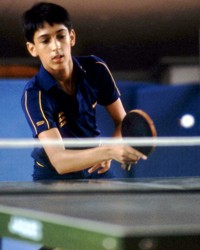
Table tennis, like squash, is
another sport for which doom and gloom has wrongly been forecast. During the
onset of affluence in the fifties and sixties, and with the collapse of
European communism in the eighties, people thought table tennis might have
been damaged permanently. Not so.
True, this cheap and
simple and brilliantly entertaining sport has never been able to replicate
the tremendous post-war boom in Britain, during which world champions like
Johnny Leach, Richard Bergmann, and the Rowe twins, would help fill Wembley
Arena with ten thousand people.
And its popularity did
decline with more money entering people’s pockets. Tastes became more
diverse, and a proliferation of different kinds of bat rubbers produced
complex spins which made it harder for spectators and viewers to comprehend
why rallies were won and lost.
Political changes
affected table tennis too. Its international founding father, Ivor Montague,
was an English aristocrat who was awarded the Order of Lenin for his
services to communism, and who saw the affordability and accessibility of
the table tennis as an ideal proletarian vehicle for bringing the world
together.
Its qualities
certainly fitted the ideology of the Chinese ruling group very well, but as
the world’s most populous nation took to table tennis, so it ensured that
China gained a tight and unhelpful stranglehold on most of its major
trophies.
Later the fall of the
Berlin wall, the collapse of the iron curtain, and the globalization of
markets opened a more commercial, bourgeois way of life to the developed
parts of the world, which was not entirely compatible with Montague’s
vision.
Nevertheless the
popularity of table tennis continued to increase, particularly among the
young, the old and the poor, so that, according to the International Olympic
Committee, it is the most popular sport in the world.
“More people play it
than soccer because you can play table tennis at any age,” according to the
IOC website. This says that not only are there are 40 million competitive
players, but “countless millions playing recreationally.”
Here in Britain
however it has struggled since the nineties for two main reasons. Fewer
people are prepared to spend their leisure time in drab surroundings, and
no-one in the last ten years have been able to match the success of Desmond
Douglas or Jill Hammersley-Parker, both of whom reached the world’s top ten.
A household survey
nevertheless suggested in 2005 that as many as 2.2 million people are
playing table tennis recreationally, though how frequently or meaningfully
is unclear. Certainly, there remain about 40,000 competitors in 250 leagues
in England, and according to Sport England’s active people survey, 160,000
people played table tennis at least once in the previous month.
What the English Table
Tennis Association (ETTA) hopes is that the large household statistic is
being confirmed the larger numbers of people who now buy table tennis tables
for their homes. Equipment companies report sales rising nicely.
Bu the ETTA membership
has been in decline, something which has been generated to some extent by
the decline of British manufacturing, which once had hundreds of works
teams, and by the decline of youth clubs during the Thatcher years. Now the
association is fighting back with successful facilities development and club
accreditation programmes which has helpe make the largest category of
players the 16-24 age group. To drive this forward the ETTA have appointed a
full-time architect, an imaginative, if rare, step to take.
The association has
also made a new investment in specialist sports colleges, and is beginning a
push to get schools to include table tennis as a curriculum activity, which
it traditionally rarely has been.
There is also an
attempt to improve the ‘cool’ factor of table tennis – the lack of which has
been a handicap amidst increasing affluence, especially among women – by
drawing attention to the many celebs who play the sport.
But the ETTA’s most
crucial short-term goal is to acquire enough funding to regain the national
centre it lost a few years ago after the decline of the national team. This
has become particularly important with the emergence of three talented
teenaged players, Paul Drinkhall, Darius Knight, and Gavin Evans, who may be
good enough to develop into contenders at the London Olympics and who need
regular high quality sparring and training.
For the time being
funds for the ETTA, even though it has been possible to raise credit through
the value of table tennis stock, which currently totals £100 million, and
consists of new dedicated facilities, upgrades, and conversions.
Other new ways
to raise the revenue still have to be found. But the outlook is a greatly
better than it was.
BADMINTON
Badminton has been the most under-estimated sport of all. That may be
because the huge number of grass roots dabblers at the game is ignored, or
because people have not had enough chance to watch the sport in all its
aesthetic and athletic glory, or perhaps because some misguided clots spread
the idea that it is a wimpish activity.
A fitting way to deal
with such dectractors is to thrust them on court with Fu Haifeng of China,
who holds the world speed-hitting record of just over 200 miles an hour, and
to make them crouch in the firing line of his towering jump smash.
Traumatized silence should follow.
The truth is that
badminton has been a success almost from its origins, which were a long time
ago. Shuttlecocks, or something like them, have been depicted on Far East
pottery a couple of thousands of years old.
It was became popular
with English children in medieval times, who played battledore and
shuttlecock, something which British army officers enthusiastically adopted
in India, where they added a more competitive element, a net.
After some of them had
been entertained by the Duke of Beaufort in the 1860’s, their sport became
named after his Gloucestershire home, Badminton house. It was here that Lady
Henrietta Somerset and a friend were proud to record that they kept the
shuttle in the air for 2,117 strokes. Badminton has always been especially
popular with women.
Three decades later
the All-England championships were born just in time to welcome in the
twentieth century, during which it became such a prestigious international
event that, for a while, a little like Wimbledon, its reputation transcended
its sport.
This fuelled the
international expansion of badminton to the point where there are now 14
million members in the 140 nations affiliated to the international governing
body. According to Andrew Ryan, one of its former chief executive, the total
number of players is nearer to a hundred million.
The growth was most
rapid in China, Indonesia, Malaysia and Korea. This agglomeration of top
players, big tournaments, and screamingly enthusiastic fans in the Far East
caused badminton to become the most viewed sport on television for the first
five days of its Olympic debut at the 1992 Barcelona Games, with an
estimated worldwide viewing of 1.1 billion.
By then government
household surveys in Britain were suggesting badminton was a sleeping giant,
with anything from the two to five million people playing at the game. If
you included occasional players, badminton was one of the most popular
sports of all. Sport England’s more stringent recent survey of active
people actually lists it as the eighth most popular, with 874,000 having
played it during the previous month.
This makes it narrowly
the most popular participatory racket sport, just slightly ahead of tennis.
It also gives badminton the highest ratio of women playing. Sport England’s
stats showed that 1.9 percent of women had played in the last month
(compared with three percent of men), though impressionistic evidence
suggests that the percentage of more casual women players is higher still.
Encouragingly, not
only is badminton more popular in the 16-24 age range than any other but has
a better spread across all the ages than the other racket sports, and a
better spread across the regions than tennis, which is strikingly popular in
London.
That is because,
unlike many sports, people find badminton easy to start, simple to
understand, relatively inexpensive, and very sociable. They only have to
develop moderate skill for it to become excellent exercise as well.
England also had some
famous players, with Gillian Gilks winning All-England singles title twice
and Nora Perry capturing two world doubles titles. But with the onset of the
open era in the early eighties, England’s standard fell behind the leading
nations - until lottery funding helped make things more professional.
This facilitated the
best purpose built badminton centre in Europe. And that, along with better
funding and vastly improved sports science, it helped to develop Nathan
Robertson and Gail Emms into world mixed doubles champions.
Now England hopes to
make up lost ground still more quickly, especially as last year it was
awarded a grant of almost £8,000,000, which made it one of the top ten best
funded sports of all.
Since then a
hundred-point plan has been created by Badminton England’s new chief
executive, Adrian Christy, which aims to make England the most successful
nation in Europe by 2010 and the best in the world by 2016, and the
governing body financially independent post London 2012.
If this sounds highly
ambitious, it is worth noting that it may well have 40 to 60 performance
centres within two years – for which an extra £1.6 million has been granted
– that two new world class coaches from the Far East have been acquired, and
that the BE’s staff has doubled to almost 100 in a matter of a few years.
The future looks the brightest for three decades.
SQUASH
Squash used to be an esoteric game with an elitist atmosphere and small
galleries, until the charismatic Jonah Barrington emerged in the sixties and
later helped inspire the yuppie-fuelled boom of the seventies and eighties.
Six times British Open
champion, raconteur, pioneer, teacher, media personality, promoter, and
visionary, Barrington represented Ireland, had a Welsh mother, coached Great
Britain, and became president of the (English) squash rackets association.
His commitment to
fierce physical challenges, psychological warfare and media monologues did
an enormous amount to popularize and to professionalise the sport, and the
number of players in Britain swelled to around three million. Later the
men’s and women’s tours spread to dozens of countries.
During the eighties
squash was commendably inventive. Courts in professional tournaments were
transformed from intimate bear-pits into transparent fish-tanks, sometimes
surrounded by 4,000 people and making a modicum of television possible. The
men’s tour lowered the tin by two inches to 17, which was also very
successful, reducing the frequency of attritional rallies.
Squash was also
fortunate that synthetic rackets improved it as a spectacle, helping
players to attack, and increasing the tactical variety of the rallies. This
was in marked contrast to tennis, where the development of kevlar, boron and
titanium made wielding rackets easier for grass roots players, but changed
rackets for the worse in the men’s professional game, with rallies becoming
more one-dimensional.
One of squash’s most
obvious mistakes was in not reacting to the expansion of the Olympic
schedule as quickly as the other three rackets sports, causing it to miss
out on a lot of high profile publicity and funding.
And in the nineties in
Britain it declined. The shop window attracted less attention, and at grass
roots the game lost ground to gymnasia, jogging, and aerobics. Its adherents
increasingly coming from older age groups. There were even pronouncements
that this was a dying sport.
But the decline has
bottomed out. Deals from Bermuda, Manchester and the Middle East have
ensured that the World Open will continue to increase its prize money each
year up to a record $300,000 plus in 2010, while the Women’s International
Squash Players Association has expanded to a record 220-plus members.
Optimism has
increased with the latest participation figures England showing increases –
with at least 45,000 player members, about 6,000 regular competitors, 2,750
affiliated courts and a thousand affiliated clubs.
Sport England’s recent
active people’s survey is still more encouraging, indicating that half a
million adults played squash in the previous four weeks, placing it ahead of
netball, hockey, cricket, and rugby union and suggesting that squash’s
participation base has not only stabilized but may be gaining critical
momentum. The future no longer looks like one of decline.
This is particularly
so since England Squash (ES) got to grips with the worrying problem of the
sport’s ageing grass roots. Mini-squash has been introduced to attract
children and new schemes are being operated to increase the links between
clubs and schools, colleges, and universities.
Because it had not
previously attempted these things, ES now admits it missed out on attracting
at least two generations of schoolchildren. However, in the two years since
these initiatives, 12 to 13 thousand new youngsters between the ages of five
and 11 have been recruited to play squash or mini-squash on a regular basis.
The stats also show
that 16-24 is the second biggest participatory age group in the sport, which
is particularly encouraging, and that there a decent spread across the
regions.
But ES still has
issues with resources. About £250,000 is being invested this year in a new
scheme for 2,500 primary schools, which will install one of the mini-squash
rebound walls, and teacher training, with potential links to secondary
schools and clubs.
What made some people
predict the demise of squash was the staggeringly higher turn-over of people
in a smaller amount of space which gymnasia were able to attract. But
despite this squash often retained a significant role in multi-sports clubs
of which it would often become the social heart.
Recently it has
acquired movable walls, making for flexible space in a three-court,
200-square-metre scenario, enabling squash to fight back against other, more
compact activities.
ES now plans to employ
more marketing people. Amongst their tasks will be to make use of squash’s
recent progress to bring a change of mind set among those who have been
attracted to other, often more mechanical or repetitive methods of keeping
fit. Upon their success will the future depend.
|

.jpg)