|
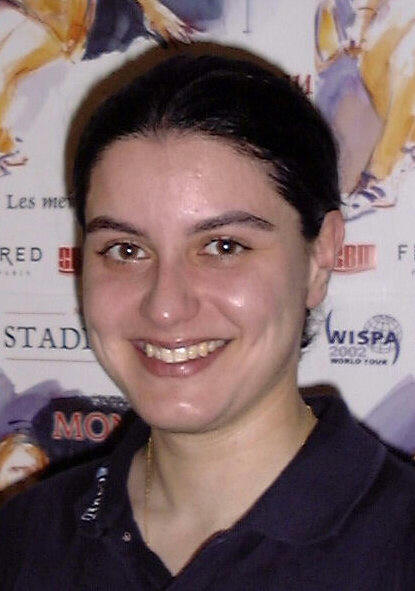
Tegwen Malik is enjoying a successful return to
squash after almost three years out of action because of a mystery virus.
She won the Washington Open, and reached the semi-finals of the Monte
Carlo Classic and Southport Open.
Alan Thatcher caught up with the Welsh ace when she retuned
home after reaching the semi-finals of the Southport Open in Connecticut.
1: Reaching the semi-final of the Southport Open, following some other
impressive results in the past few weeks, was a significant achievement
after almost three years out of the game. That must have felt good?
A: Yes it did. To come back and win one tournament and get to the semis of
the other two I have played is a great start for me, but I still have much
to work on and I still have to keep the same approach to it all that I
have been doing so far.
2: Did you ever find out what caused the virus?
A: No, the doctors were really helpful and carried out all sorts of tests
but could not tell me what I had other than a virus which at times made
things harder to cope with because certain symptoms could not be
explained. This was obviously worrying because I felt that I did not
really know what I was up against.
3: When did you start training or your comeback?
A: Even though I played the Welsh Closed and the European Team
Championships in 2002, I was still not at all well. I suppose the
Washington Open was my comeback tournament and my first match back was
only a few weeks before that, so for me that puts things into perspective.
4: What sort of workload did you start with, and how did you build it up?
A: The workload was obviously very light because when I was ill, I could
not walk or support my own body weight in bed to sit up so I have had to
be very patient and work extremely hard on building up my basic strength
again before I could even contemplate going back on court. However, as I
got stronger, I was able to go on court and do just very light training
when the physio felt that I was strong enough to be able to control my
body position into and out of lunges.
5: Who was working with you along the way?
A: My mum and dad have been absolutely fantastic the whole time and my
brother, but I have also had a lot of support from the Sports Council for
Wales. I have been working really hard with Joanne Elphinston, a
physiotherapist who has helped me build up my strength gradually and also
with Dr Tara Edwards, a sports psychologist who has helped me through all
sorts of difficulties to get me back competing again. I have also just
started working with Bernie Dietzig, a physiologist who is monitoring me to check
that I am not overdoing things physically and, of course, with Chris
Robertson (the Welsh national coach).
6: Did you have any major setbacks, physical or psychological? If so, how
did you deal with them?
A: Yes I had several physical and psychological setbacks but the support
of the team I have got working with me helped me get through them.
7: When did you feel absolutely "ready" to get back on court in a
competitive situation?
A: I don’t think that I can honestly say that I ever felt ready to get
back into competitive squash, it was more a case of the training going
well and the encouragement from those around me that made me decide to go
for it, even though I was concerned that I would make myself ill again. I
decided that the only way I would find out if I could do it was to just go
for it.
9: And how did it feel when you went back on court?
A: I was very nervous getting back on the court because, as I mentioned
above, I thought I would make myself ill again. However, it obviously has
not and I feel each time I do something new my confidence in myself grows
as I find that I am more able than I thought.
10: Did you find your attitude towards the game, and yourself, had changed
after having so long out of action?
A: Yes, definitely. When I was very ill, I thought that I was going to
die and so I think that if something like that does not affect you then
nothing will.
11: What's changed in squash during that time?
A: I don’t think that a great deal has changed in the three years that I
have been out of the game. There are some new faces about which is always
a good thing, but other than that I don’t think there has been any major
changes.
12: Now you have proved your fitness, and are achieving some impressive
results, what are your short-term and long-term goals?
A: I have only just started back and still have a lot that I want to work
on, but my first goal is to get my ranking back up into the top 16. My
main goal, though, is to keep working steadily like I have been doing so
that I can reach my full potential.
13: Where are you based these days?
A: I am based in Wales. I live in Swansea but do most of my training in
Cardiff in the Welsh Institute of Sport.
14: Which coaches are you working with?
A: I am mainly working with Chris Robertson but still get advice and help
from Adrian Davies.
15: If you had a message for any other player who might face a similar
long spell out of the game, what would it be?
A: I think the main thing is to be patient and at the end of the day
squash is not everything in life, there are more important things, such as
one’s health. But, if someone is out for a prolonged period and they are
trying to come back, they have to go back to basics and work on
strengthening one’s foundation before diving back into competitive squash.
Tegwen, thank you. Keep up the good work and the best of luck for the
future. |
 |